Strengthening social skills through folk dance among university students
DOI:
https://doi.org/10.37711/desafios.2026.17.1.8Keywords:
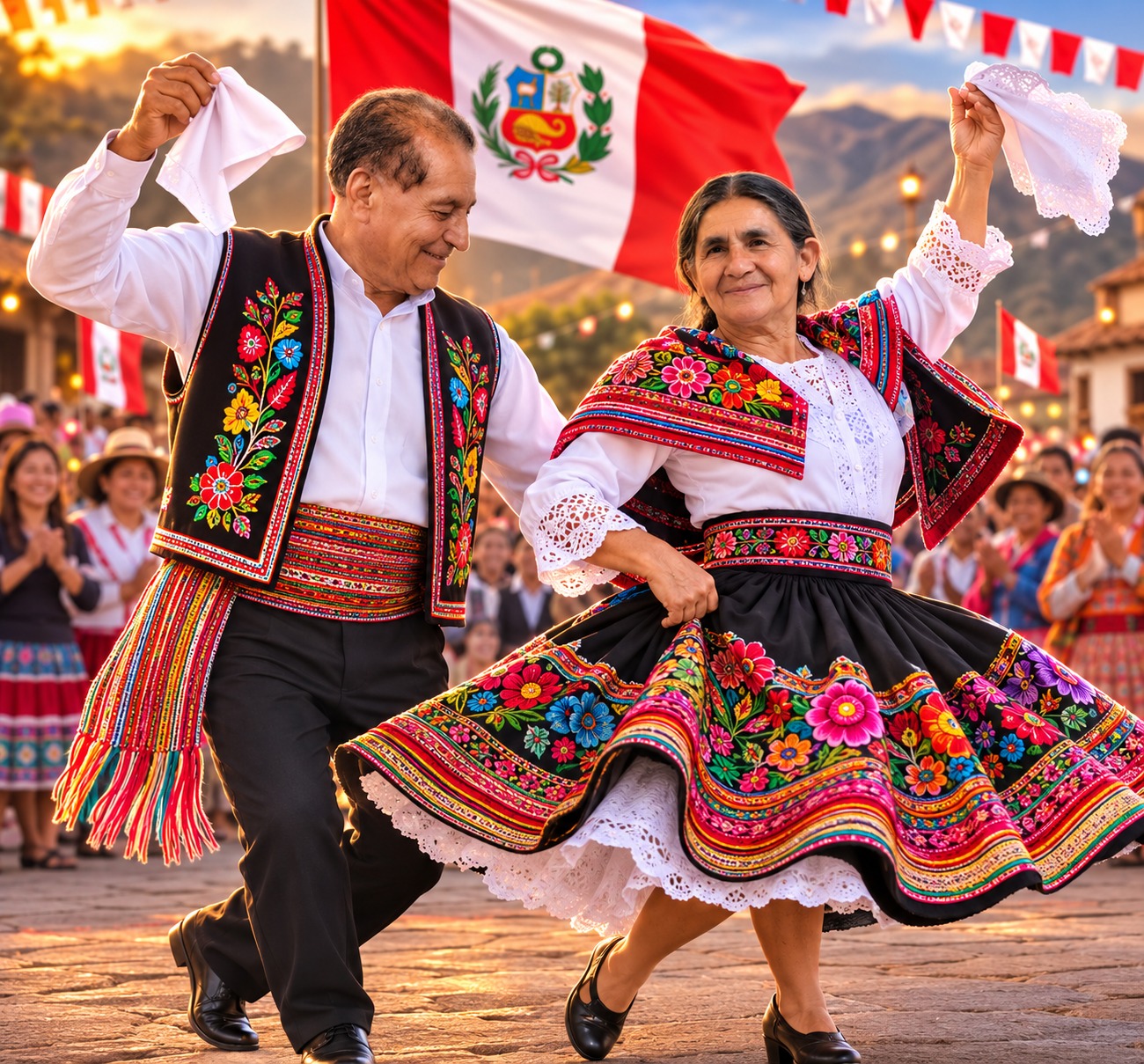
professional training, comprehensive development, socioemotional skills, culture, educationAbstract
Objective. To evaluate the level of social skills development among physical education students through the implementation of a folk dance-based program. Methods. This quantitative, applied study used a pre-experimental single-group design involving 33 participants. Ten intervention sessions were conducted between the pretest and posttest. Both assessments comprised 36 equivalent items designed to measure changes. The instruments used included structured surveys, observation guides, and assessment rubrics. Data were summarized using means and standard deviations to describe the pretest and posttest results, and a paired Student’s t-test was used to compare scores before and after the intervention. In addition, the effect size was estimated using Cohen’s d. Results. Social skills scores increased from the initial assessment (pretest) to the final assessment (posttest). The mean pretest score was 72.52, with a standard deviation of 14.605, whereas the mean posttest score was 131.42, with a standard deviation of 11.294. The paired Student’s t-test showed a significant difference between the two assessment time points, with a Cohen’s d of 13.42. Conclusions. The use of folk dance as an intervention was associated with a substantial improvement in basic social skills, including effective communication and interaction.
Downloads
References
Álvarez Ossa, M. E., Méndez Díaz, C. H., y Castillo (2022). La danza folklórica una estrategia pedagógica para mejorar relaciones interpersonales en niños de básica primaria. Revista Temario Científico, 2(2), 9-24. https://doi.org/10.47212/rtcAlinin.2.2.2
Barrios Meneses, N., Ortiz Quevedo, J. P., y Pongutá Forero, J. (2023). La danza como apuesta para el desarrollo de habilidades sociales en la educación superior. Hacedor - AIAPÆC, 7(2), 237-247. https://doi.org/10.26495/rch.v7i2.2534
Bayas, R., Aguaguiña, S., Dillon, S., y Moyano, L. (2025). La danza como expresión cultural y su impacto en el desarrollo cognitivo. Esprint Investigación, 4(1), 142-153. https://doi.org/10.61347/ei.v4i1.101
Caballo, V. E. (2007). Manual de evaluación y entrenamiento de las habilidades sociales (7.ª ed.). Siglo XXI.
Cañarte, G., Chalen, N., y González, V. (2026). Impacto de los programas de danza en el bienestar emocional de los estudiantes universitarios. Ciencia Y Educación, 7(3.1), 237 - 249. https://doi.org/10.5281/zenodo.19502545
Carazas Durand, C. R., Palomino Chacón, C., & Barrios Sanchez, F. (2025). Habilidades sociales en estudiantes de educación básica: una revisión sistemática. Revista InveCom, 5(4), 1-11. https://doi.org/10.5281/ZENODO.14847941
Castillo, M., Asenjo, C., Ahumada, E., y Catalán Catalán, F. (2025). Efectos de la danza folclórica en el bienestar y el rendimiento académico de estudiantes universitarios. Revista Reflexión E Investigación Educacional, 7(2), 1-11. https://doi.org/10.22320/reined.v7i2.7439
Cedeño, M. M., Valenzuela, E. J., Ferruzola, B. E., y Zamora, A. B. (2021). La danza folclórica en el proceso de aprendizaje en los estudiantes de educación básica. Ecuadorian Science Journal, 5(1), 24-29. https://doi.org/https://doi.org/10.46480/esj.5.1.104
De Fruyt, F., & Scheirlinckx, J. (2025). Challenges and opportunities for the assessment of social-emotional skills. ECNU Review of Education 5(2), 1-12. https://doi.org/10.1177/20965311251319355
Delgado, M. (2024). Habilidades sociales en estudiantes de educación secundaria de América Latina: una revisión sistemática. Horizontes. Horizontes Revista De Investigación En Ciencias De La Educación, 8(34), 1651-1665. https://doi.org/10.33996/REVISTAHORIZONTES.V8I34.824
Del Prette, Z. A. P., & Del Prette, A. (2017). Competência social e habilidades sociais: Manual teórico-prático. Vozes.
Ding, Y., & Nachiappan, S. (2026). The Relationship Between Learning Motivation and Performance Ability Among Folk Dance Major Students in Shijiazhuang, Hebei Province: The Mediating Role of Self-Efficacy. International Journal of Education and Social Development, 6(3), 21-28. https://doi.org/10.54097/ay28gx08
Fernández, E. Á. (2020). Las danzas folklóricas en el desarrollo de habilidades sociales en estudiantes universitarios [Tesis de licenciatura, Universidad de Ciencias y Humanidades]. Repositorio Institucional de la Universidad de Ciencias y Humanidades. http://hdl.handle.net/20.500.12872/641
Ferreira Provenzano, C. L., Pereira Kozak, J. C., y da Silva Gasparotto, G. (2022). La autoeficacia y su relación con la práctica del baile. Una revisión sistemática. Lecturas: Educación Física y Deportes, 27(292), 198-215. https://doi.org/10.46642/efd.v27i292.2551
Goldstein, A. P., Sprafkin, R. P., Gershaw, N. J., & Klein, P. (1980). Skillstreaming the adolescent: A structured learning approach to teaching prosocial skills. Research Press.
Huayta Vilcazan, J. R., & Apaza Ramos, G. (2025). Arqueotécnica como herramienta pedagógica para el aprendizaje de manifestaciones culturales en estudiantes de secundaria. Comuni@cción: Revista de Investigación en Comunicación y Desarrollo, 16 (2), 149-160. https://doi.org/10.33595/2226-1478.16.2.1285
Jara Guerrero, M. E. (2025). Enfoque por competencias en la educación para una sociedad laboral. Desafíos, 16(1), 19-28. https://doi.org/10.37711/desafios.2025.15.1.436
Kovač, M. (2025). The Influence of Dance on Social Skills. In B. Kovačič (Ed.), Širjenje obzorij o poučevanju glasbe (pp. 191-196). University of Maribor Press. https://doi.org/10.18690/um.pef.3.2025.31
Mantilla, M. C. (2023). La danza folklórica como estrategia pedagógica para el fortalecimiento de la atención y habilidades sociales en los jóvenes adolescentes [Tesis de maestría, Universidad Tecnológica Indoamérica]. Repositorio Universidad Indoamérica. https://repositorio.uti.edu.ec//handle/123456789/5652
Mantilla, M. C., y Zurita, S. P. (2024). La danza folklórica como estrategia pedagógica para el fortalecimiento de la atención y habilidades sociales en los jóvenes adolescentes. Revista Científica Arbitrada de Investigación en Comunicación, Marketing y Empresa, 7(13), 85-103. https://doi.org/https://doi.org/10.46296/rc.v7i13.0204
Moyolema, P. A., Freire, A. S., Mayorga, D. C., y Cosquillo, J. L. (2024). Habilidades sociales como clave en el éxito académico. 593 Digital Publisher, 9(1), 148-162. https://doi.org/https://doi.org/10.33386/593dp.2024.1.2120
Núñez, M.R., y Guillén, L. (2022). Actividades de danza folclórica en la clase de Educación Física. Lecturas: Educación Física y Deportes, 26(284), 42-51. https://doi.org/10.46642/efd.v26i284.328
Olivares, G., Nolasco-Mamani, M., Quispe-Quezada, U., Florez, R., Haro, M., Carranza, S., Llanos, S., Zulueta, C., Sardón, W., Cubas, C., Delgado, L., Céspedes, B., y Gonzales, A. (2023). Mejorando los Componentes de la Metodología de la Investigación Científica para la Enseñanza de Idiomas. Revista mundial de idioma inglés, 13(6), 303-313. https://doi.org/10.5430/wjel.v13n6p303
Rodrigues, A. da S., Feitosa, F. B., Wagner, M. F., Pedroso, R., Rodríguez, T. D. M., y Bezerra, G. S. (2024). Treinamento de habilidades sociais e autoestima na adolescência: Um estudo de caso. PsicologiaEm Estudo, 29(1), e56170. https://doi.org/10.4025/PSICOLESTUD.V29I0.56170
Romero, M. A. (2024). Danzas folklóricas y habilidades sociales en adolescentes de una institución educativa pública de San Martín de Porres, 2024 [Tesis de Maestría, Universidad César Vallejo]. https://repositorio.ucv.edu.pe/handle/20.500.12692/150313?show=full
Sánchez, J. (2024). Metodología de la investigación: tipos metodología. ResearchGate. https://doi.org/10.13140/RG.2.2.24354.81603
Sánchez-Bolívar, L., Vásquez, L. M., Escalante-González, S., Martínez-Martínez, A., y Zúrita-Ortega, F. (2023). Habilidades sociales en el perfil formativo y psicosocial de los estudiantes universitarios: Una revisión sistemática. Universitas Psychologica, 22, 1-10. https://doi.org/10.11144/JAVERIANA.UPSY22.HSPF
Santa, G. B., Albújar, C. E., Becerra, E. R., y Fernández, F. A. (2023). Habilidades sociales en estudiantes de educación secundaria. Conrado, 19(94), 120-128. http://scielo.sld.cu/scielo.php?script=sci_arttext&pid=S1990-86442023000500120
Sierra Delgado, M. S., Coaquira Mamani, J. M., Coaquira Ramon, I. J., Caceres Cabana, Z. A., y Aleman Vilca, Y. (2026). Estrés académico y regulación emocional en estudiantes universitarios: Dinámicas psicológicas en entornos de alta exigencia. Universidad, Ciencia y Tecnología, 30(130), 87-97. https://doi.org/10.47460/uct.v30i130.1038
Ulloa, V. J., y Taquire, Y. I. (2025). Habilidades sociales: un componente de la inteligencia emocional. Paidagogo, 7(2), 165-183. https://doi.org/10.52936/p.v7i2.337
Veas, B. V., Granizo, C. E., Romero, O. P., y Maqueira, G. D. (2024). La danza folklórica como alternativa para la inclusión de estudiantes con discapacidad física en las clases de Educación Física. MQRInvestigar, 8(3), 2862-2879. https://doi.org/https://doi.org/10.56048/MQR20225.8.3.2024.2862-2879
Vergara-Moncada, R., (2023). Gestión del Conocimiento y las Tecnologías de Información y Comunicación para fortalecer la enseñanza en la Facultad de Ciencias Contables en la Universidad Pública Peruana. 593 Digital Publisher CEIT, 9(1), 5-14. https://doi.org/10.33386/593dp.2024.1.2120
Yslado Méndez, R.M., Menacho Zorrilla, R.J., Nivin Guerrero, T.A., Daza Miranda, M.C., y Henostroza Minaya, J.K. (2025). Habilidades sociales y rendimiento académico en estudiantes de secundaria en Perú. Revista InveCom, 6(3), 1-11. https://doi.org/10.5281/zenodo.17620168
Downloads
Published
Issue
Section
License
Copyright (c) 2026 Miriam Elizabeth Jara Guerrero

This work is licensed under a Creative Commons Attribution 4.0 International License.
a. Authors retain copyright to their published works, granting the journal the right of first publication.
b. Authors retain their trademark and patent rights, as well as rights to any process or procedure described in the article.
c. Authors retain the right to share, copy, distribute, perform, and publicly communicate the article published in the journal (e.g., by placing it in an institutional repository or publishing it in a book), with acknowledgment of its initial publication in the journal.
d. Authors retain the right to republish their work, to use the article or any part thereof (e.g., in a compilation of their work, conference notes, a thesis, or a book), provided they acknowledge the original source of publication (authors of the work, journal, volume, issue, and date).