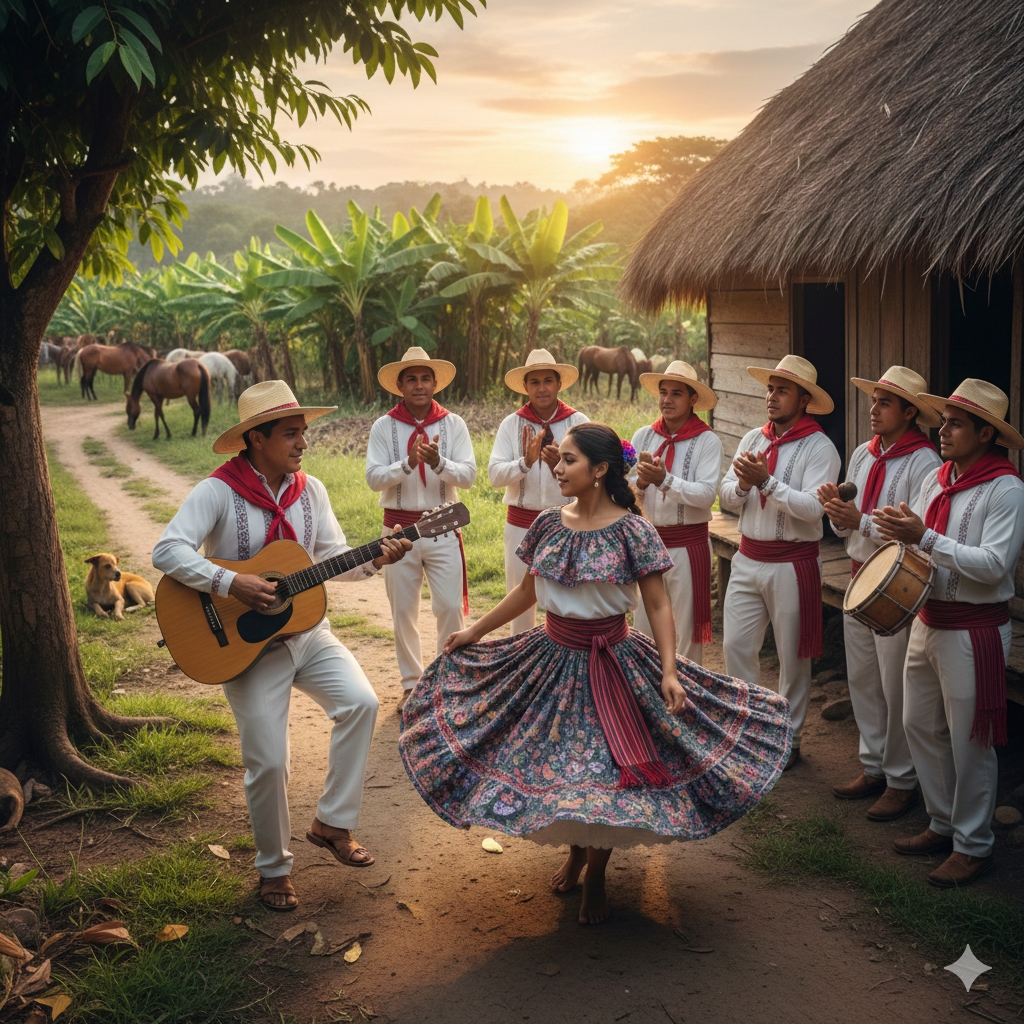
Montubio culture and its contemporary relevance in the ancestral communities of Sucre Canton, Ecuador
DOI:
https://doi.org/10.37711/desafios.2025.16.2.8Keywords:
Montubio culture, cultural identity, cultural heritage, education, ancestral communitiesAbstract
Objective. To analyze the level of knowledge and appreciation of Montubio culture among university students in Sucre Canton (Ecuador), and to propose educational strategies that strengthen its preservation as ancestral heritage. Methods. A mixed-methods, descriptive study was conducted, integrating analytical, synthetic, historical, logical, inductive, and deductive methods. A survey was administered to 191 students from the Universidad Laica Eloy Alfaro de Manabí (Sucre campus), and semi-structured interviews were conducted with three faculty members and cultural managers. Results. Quantitative findings showed that university students’ knowledge of Montubio culture in Sucre Canton is limited and fragmented, associated with limited access to information and systematized educational resources; however, a high level of acceptance of educational strategies aimed at its preservation was identified. Qualitative findings from interviews with faculty members and cultural managers revealed weak integration of Montubio culture into educational processes and the need to strengthen its intergenerational transmission. As an outcome, an educational brochure was developed to reinforce cultural identity and support the preservation of local heritage. Conclusions: University students in Sucre Canton exhibit low levels of knowledge and only partial appreciation of Montubio culture, conditioned by limited access to systematized cultural information, highlighting weaknesses in its intergenerational transmission.
Downloads
References
Alvarado, L. F., y Macias, J. F. (2024). Los valores ancestrales como identidad cultural montubia. Dominio De Las Ciencias, 10(2), 657-667. https://doi.org/https://doi.org/10.23857/dc.v10i2.3824
Bravo, D. V. (2022). Patrimonio e identidad cultural, el desafío de la educación patrimonial en la era de los avances tecnológicos. REVISTA DE HISTORIA Y GEOGRAFÍA (47), 191-217. https://doi.org/https://doi.org/10.29344/07194145.47.3384
Cedeño, E. B., Cedeño, X. B., y Molina, L. (2023). Identidad Colectiva, Empoderamiento y Gastronomía en Manabí – Ecuador. Revista Internacional De Gestión InnovaciónY Sostenibilidad Turística, 3(1), 86-96. https://doi.org/https://doi.org/10.51260/rigistur.v3i1.391
Felix, E. (2021). Perú: lucha por la integración pluricultural y el peligro de la modernidad en la educación. Revista Estudios Psicológicos, 1(4), 33-50. https://estudiospsicologicos.com/index.php/rep/article/view/17
Finer M, Jenkins CN, Pimm SL, Keane B & Ross C (2008). Oil and Gas Projects in the Western Amazon: Threats to Wilderness, Biodiversity, and Indigenous Peoples. PLoS ONE, 3(8),
e2932. https://doi.org/10.1371/journal.pone.0002932
Fondo de las Naciones Unidad para la Infancia. (2025). La educación intercultural bilingüe en Ecuador: Materiales en lenguas originarias y en español para la EIB. UNICEF. https://www.unicef.org/lac/la-educacion-intercultural-bilingue-eib-enecuador?utm_source=chatgpt.com
García, Y. V., Blanco, R. F., y Enrique, L. E. (2018). Proteccion del patrimonio sonoro y documental de la cultura montubia den Ecuador. Universidad&Ciencia, 7(2), 1-12. https://works.hcommons.org/records/24407-gc403
García, Y. V., Castellón, G. D., Sánchez, V. S., y Chica, L. G. (2025). Inclusión social del pueblo Montubio de Ecuador a través de las prácticas musicales. Revista De Ciencias Sociales, 31(1), 342-354. https://doi.org/https://doi.org/10.31876/rcs.v31i1.43512
Guacho Tipán, I. G. (2022). El papel de la educación intercultural en la promoción del respeto y la diversidad. Bastcorp International Journal, 1(1), 4-13. https://doi.org/https://doi.org/10.62943/bij.v1n1.2022.18
Horbath, J. E. (2008). La discriminación laboral de los indígenas en los mercados urbanos de trabajo en México: revisión y balance de un fenómeno persistente. Siglo del Hombre CLACSO. https://biblioteca.clacso.edu.ar/clacso/clacsocrop/20120606125325/04horb.pdf
Mendoza, B. E., Ureta, L. A., Alcívar, L. D., y Félix, M. F. (2025). Patrimonio Cultural Inmaterial de Manabí (Ecuador): Vulnerabilidad y Acciones para la Salvaguardia. Revista Reflexiones, 105(1), 1-33. https://doi.org/https://doi.org/10.15517/rr.v105i1.60906
Molina, J. E., y Rivera, P. M. (2022). Decolonial approach to the intercultural bilingual curriculum: from theory to practice. Revista Interamericana De Investigación Educación Y Pedagogía RIIEP, 15(1), 281-310. https://www.researchgate.net/publication/361201865_Decolonial_approach_to_the_intercultural_bilingual_curriculum_from_theory_to_practice
Mujica Johnson, F. (2024). La pedagogía de la profundidad y la amplitud. Una perspectiva decolonial basada en Gabriela Mistral y Enrique Dussel. Revista Dilemas Conteporaneos, 1-15. https://doi.org/ https://doi.org/10.46377/dilemas.v11i2.4006
Nagar, S. D., Conley, A. B., Chande, A. T., Rishishwar, L., Sharma, S., Mariño-Ramírez, L., Aguinaga-Romero, G., GonzálezAndrade, F., y King, J. (2021). Genetic ancestry and ethnic identity in Ecuador. HGG Advances, 2(4). https://doi.org/https://doi.org/10.1016/j.xhgg.2021.100050
Nivela, G. A., Caicedo, W. R., Burgos, B. A., y Suarez, S. K. (2021). Importancia de la cultura montubia como recurso y atractivo turístico en la Provincia de Los Ríos. Journal of Science and Research, 6(3), 161-184. https://doi.org/https://doi.org/10.5281/zenodo.5659422
Oblitas Bardales, S., Torres Acurio, J., Bautista Apaza, E. V., y Mamani Cachicatari, G. (2025). Gestión de la participación comunitaria y su impacto en la educación intercultural bilingüe en el altiplano peruano. Revista Espacios, 46(02), 1-14. https://revistaespacios.com/a25v46n02/25460204.html
Organización de Estados Iberoamericanos. (2024). Encuentro Nacional de Educación Intercultural Bilingüe y V Encuentro de Experiencias Etnoeducativas. OEI. https://oei.int/oficinas/ecuador/noticias/encuentro-nacionalde-educacion-intercultural-bilingue-y-v-encuentro-deexperiencias-etnoeducativas/?utm_source=chatgpt.com
Revista PCI. (2024). Línea de Fomento de la Artesanía Tradicional y el Patrimonio Agroalimentario como estrategia de salvaguardia del PCI. Revista Patrimonio Cultural Inmaterial, 15, 1-89. https://revistas.patrimoniocultural.gob.ec/ojs/index.php/PCI/issue/view/34/28
Sacón, Y. N., Zambrano, M. L., y Macías, C. C. (2025). Diagnóstico del patrimonio cultural inmaterial de las comunidades del cantón Bolívar, Manabí, Ecuador. Turismo Y Patrimonio, 24, 7-24. https://doi.org/https://doi.org/10.24265/turpatrim.2025.n24.01
Seithi Kato, D. S., Galamba, A., & Pinto Monteiro, B. A. (2023). Decolonial scientifc education to combat ‘science for domination’. Cult Stud of Sci Educ, 18, 217-235. https://doi.org/https://doi.org/10.1007/s11422-023-10165-4
Torres Jara, G. N. (2015). Diseño de una guía didáctica de las celebraciones andinas y sus manifestaciones culturales para niñas y niños entre 8 a 12 años de edad de la provincia Chimborazo con ilustraciones infantiles [Tesis de maestría, Universidad de Barcelona]. Diposit Digital. https://doi.org/https://hdl.handle.net/2445/69353
Vergara Mantilla, M. A., Pibaque-Pionce, M. S., y García Rodríguez, R. (2023). Importancia del conocimiento patrimonial y cultural aplicando las TIC en estudiantes del bachillerato. Journal TechInnovation, 2(2), 70-78. https://doi.org/10.47230/Journal.TechInnovation.v2.n2.2023.70-78
Whitten, N. E. (1976). Ecuadorian Ethnocide and Indigenous Ethnogenesis: Amazonian Resurgence. International Work Group for Indigenous Affairs. https://iwgia.org/images/publications/0189_23Andino.pdf
Zambrano, L. M. (2022). La sabiduría cultural como identidad histórica en las nuevas generaciones manabitas. Revista Scientifc, 7(23), 119-135. https://www.researchgate.net/publication/369310714_La_sabiduria_cultural_como_identidad_historica_en_las_nuevas_generaciones_manabitas
Downloads
Published
Issue
Section
License
Copyright (c) 2025 William Renán Meneses Pantoja, Michell Josué Murillo Vera, Mayra Yasmina Espinoza Arauz, Eduardo Antonio Caicedo Coello, Carlos Enrique Chica Medranda

This work is licensed under a Creative Commons Attribution 4.0 International License.
a. Authors retain copyright to their published works, granting the journal the right of first publication.
b. Authors retain their trademark and patent rights, as well as rights to any process or procedure described in the article.
c. Authors retain the right to share, copy, distribute, perform, and publicly communicate the article published in the journal (e.g., by placing it in an institutional repository or publishing it in a book), with acknowledgment of its initial publication in the journal.
d. Authors retain the right to republish their work, to use the article or any part thereof (e.g., in a compilation of their work, conference notes, a thesis, or a book), provided they acknowledge the original source of publication (authors of the work, journal, volume, issue, and date).