Toxina botulínica: ¿un nuevo aliado en la lucha contra la dermatitis seborreica?
DOI:
https://doi.org/10.37711/rpcs.2026.8.1.1Palabras clave:
toxinas botulínicas, dermatitis, fisiopatología, tratamiento farmacológico, terapéuticaResumen
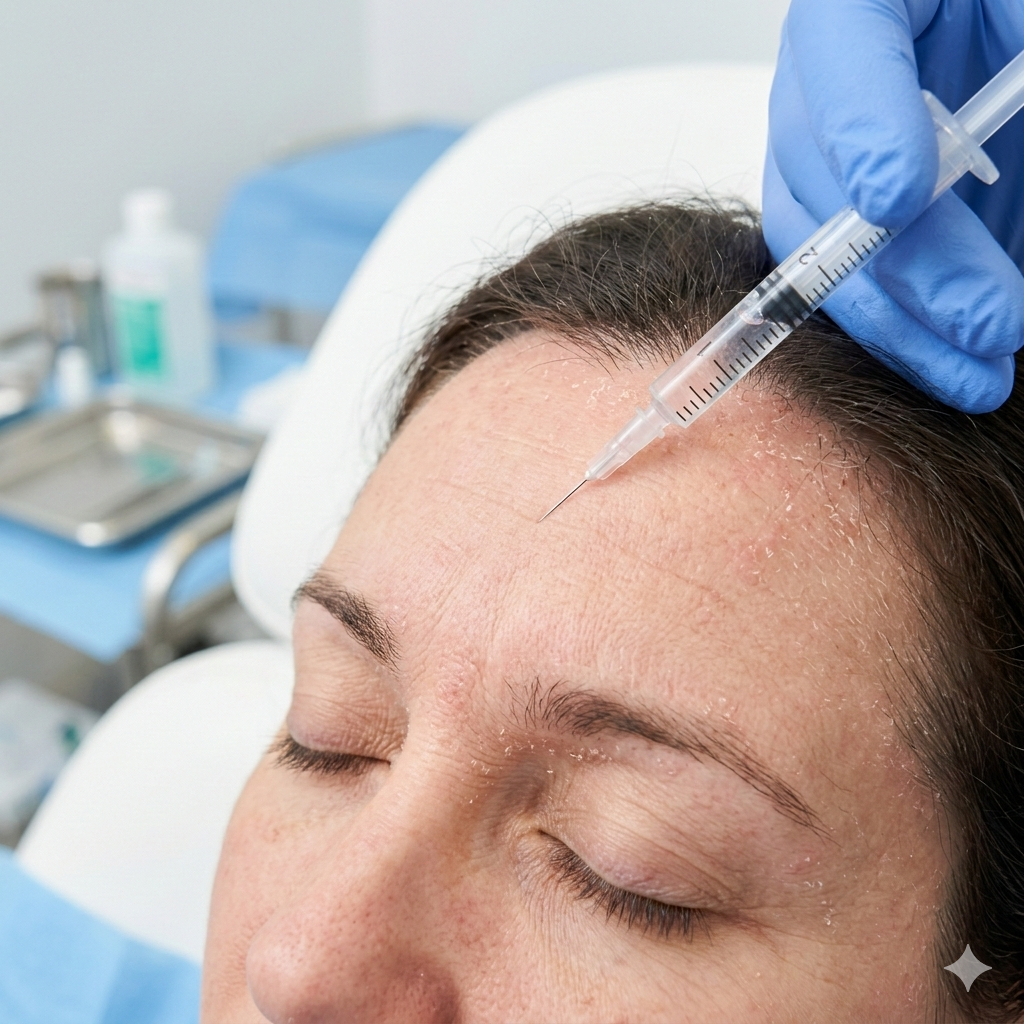
El objetivo de la presente revisión fue proporcionar información sobre la fisiopatología de la dermatitis seborreica (DS), el mecanismo de acción de la toxina botulínica (BoNT) e información sobre los principales hallazgos relacionados con los beneficios y sus limitaciones de uso en el tratamiento de esta enfermedad. Se realizó una revisión bibliográfica en las bases de datos Scopus y Web of Science entre 2019 y 2024 y un análisis bibliométrico de la producción científica relacionada. Se observó una baja producción científica entre 2019 y 2024 con una tasa de crecimiento anual del 14,87 %. Si bien el uso de la toxina botulínica tipo A (BoNT-A) ha mostrado beneficios en el control de la DS, también existen algunas limitaciones sobre su aplicabilidad relacionadas con las diferencias en el tipo de piel, la genética y las condiciones de salud, además del sesgo en los análisis debido al limitado número de estudios específicos sobre el tema, la calidad de los estudios y la corta duración de los ensayos, lo cual limita la verificación de los efectos y riesgos a largo plazo del uso de BoNT-A. Los estudios muestran el uso de la BoNT como un tratamiento prometedor para enfermedades, sin embargo, se requiere realizar un mayor número de estudios de alta calidad para confirmar su eficacia y seguridad.
Descargas
Referencias
1. Galizia G, Belloni Fortina A, Semenzato A. Seborrheic dermatitis: From microbiome and skin barrier involvement to emerging approaches in dermocosmetic treatment. Cosmetics [Internet]. 2024 [Consultado el 15 de septiembre de 2025];11(6):208. https://doi.org/10.3390/cosmetics11060208
2. Wikramanayake TC, Borda LJ, Miteva M, Paus R. Seborrheic dermatitis: looking beyond Malassezia. Exp Dermatol. [Internet]. 2019 [Consultado el 15 de septiembre de 2025];28(9):991-1001. https://doi.org/10.1111/exd.14006
3. Polaskey MT, Chang CH, Daftary K, Fakhraie S, Miller CH, Chovatiya R. The Global Prevalence of Seborrheic Dermatitis: A Systematic Review and Meta-Analysis. JAMA Dermatol. [Internet]. 2024 [Consultado el 15 de septiembre de 2025];160(8):846-855. 10.1001/jamadermatol.2024.1987
4. Dall’oglio F, Nasca MR, Gerbino C, Micali G. An overview of the diagnosis and management of seborrheic dermatitis. Clin Cosmet Investig Dermatol. [Internet]. 2022 [Consultado el 15 de septiembre de 2025];15:1537-48. 10.2147/CCID.S284671
5. Patel TS, Dalia Y. Seborrheic Dermatitis. JAMA Dermatology [Internet]. 1 de diciembre de 2024 [Consultado el 15 de septiembre de 2025];160(12):1371. Disponible en: https://jamanetwork.com/journals/jamadermatology/fullarticle/2824561
6. Dessinioti C, Katsambas A. Seborrheic dermatitis: etiology, risk factors, and treatments: facts and controversies. Clin Dermatol. [Internet]. 2013 [Consultado el 15 de septiembre de 2025];31(4):343-51. http://dx.doi.org/10.1016/j.clindermatol.2013.01.001
7. Polaskey MT, Woolery-Llloyd H, Osborne D, Burnett P, Hanna D, Chovatiya R. When patient diversity informs formulation: reimagining treatment for seborrheic dermatitis. Dermatol Ther. (Heidelb) [Internet]. 2024 [Consultado el 15 de septiembre de 2025];14(5):1071-7. https://doi.org/10.1007/s13555-024-01161-9
8. Kim YS, Hong ES, Kim HS. Botulinum toxin in the field of dermatology: novel indications. Toxins (Basel) [Internet]. 2017 [Consultado el 15 de septiembre de 2025];9(12):403. 10.3390/toxins9120403
9. Zhantleuova A, Leese C, Andreou AP, Karimova A, Carpenter G, Davletov B. Recent developments in engineering non-paralytic botulinum molecules for therapeutic applications. Toxins (Basel) [Internet]. 2024 [Consultado el 15 de septiembre de 2025];16(4):175. https://doi.org/10.3390/toxins16040175
10. Shirshakova M, Morozova E, Sokolova D, Pervykh S, Smirnova L. The effectiveness of botulinum toxin type A (BTX-A) in the treatment of facial skin oily seborrhea, enlarged pores, and symptom complex of post-acne. Int J Dermatol. [Internet]. 2021 [Consultado el 15 de septiembre de 2025];1-10. https://doi.org/10.1111/ijd.15574
11. Min P, Xi W, Grassetti L, Trisliana Perdanasari A, Torresetti M, Feng S, et al. Sebum production alteration after botulinum toxin type a injections for the treatment of forehead rhytides: A prospective randomized double-blind dose-comparative clinical investigation. Aesthetic Surg J. [Internet]. 2015 [Consultado el 15 de septiembre de 2025];35(5):600-10. 10.1093/asj/sju150
12. Shuo L, Ting Y, KeLun W, Rui Z, Rui Z, Hang W. Efficacy and possible mechanisms of botulinum toxin treatment of oily skin. J Cosmet Dermatol. [Internet]. 2019 [Consultado el 15 de septiembre de 2025];18(2):451-7. doi: 10.1111/jocd.12866
13. Sayed KS, Hegazy R, Gawdat HI, Abdel Hay RM, Ahmed MM, Mohammed FN, et al. The efficacy of intradermal injections of botulinum toxin in the management of enlarged facial pores and seborrhea: a split face-controlled study. J Dermatolog Treat. [Internet]. 2021 [Consultado el 15 de septiembre de 2025];32(7):771-7. https://doi.org/10.1080/09546634.2019.1708241
14. Rho NK, Gil YC. Botulinum neurotoxin type a in the treatment of facial seborrhea and acne: Evidence and a proposed mechanism. Toxins (Basel). [Internet]. 2021 [Consultado el 15 de septiembre de 2025];13(11):817. doi: 10.3390/toxins13110817
15. Del Rosso JQ, Kircik LH, Stein Gold L, Thiboutot D. Androgens, Androgen Receptors, and the Skin: From the Laboratory to the Clinic With Emphasis on Clinical and Therapeutic Implications. J Drugs Dermatol. [Internet]. 2020 [Consultado el 15 de septiembre de 2025];19(3):30-5. https://pubmed.ncbi.nlm.nih.gov/32550699/
16. Zouboulis CC, Coenye T, He L, Kabashima K, Kobayashi T, Niemann C, et al. Sebaceous immunobiology - skin homeostasis, pathophysiology, coordination of innate immunity and inflammatory response and disease associations. Front Immunol. [Internet]. 2022 [Consultado el 10 de septiembre de 2025];13:1029818. doi: 10.3389/fimmu.2022.1029818
17. Zouboulis CC. Die Talgdrüse. Hautarzt [Internet]. 2010 [Consultado el 10 de septiembre de 2025];61(6):467-77. https://doi.org/10.1007/s00105-009-1894-y
18. Zani MB, Soares RC, Arruda ACBB, de Arruda LHF, Paulino LC. Ketoconazole does not decrease fungal amount in patients with seborrhoeic dermatitis. Br J Dermatol. [Internet]. 2016 [Consultado el 10 de septiembre de 2025];175(2):417-21. https://doi.org/10.1111/bjd.14501
19. Saunders CW, Scheynius A, Heitman J. Malassezia fungi are specialized to live on skin and associated with dandruff, eczema, and other skin diseases. PLoS Pathog. [Internet]. 2012 [Consultado el 10 de septiembre de 2025];8(6):6-9. https://doi.org/10.1371/journal.ppat.1002701
20. Lin Q, Panchamukhi A, Li P, Shan W, Zhou H, Hou L, et al. Malassezia and Staphylococcus dominate scalp microbiome for seborrheic dermatitis. Bioprocess Biosyst Eng. [Internet]. 2021 [Consultado el 10 de septiembre de 2025];44(5):965-75. https://doi.org/10.1007/s00449-020-02333-5
21. Vijaya Chandra SH, Srinivas R, Dawson TL, Common JE. Cutaneous Malassezia: commensal, pathogen, or protector?. Front Cell Infect Microbiol. [Internet]. 2021 [Consultado el 10 de septiembre de 2025];10:614446. 10.3389/fcimb.2020.614446
22. Grice EA, Dawson TL. Host–microbe interactions: Malassezia and human skin. Curr Opin Microbiol. [Internet]. 2017 [Consultado el 15 de septiembre de 2025];40:81-7. http://dx.doi.org/10.1016/j.mib.2017.10.024
23. Theelen B, Cafarchia C, Gaitanis G, Bassukas ID, Boekhout T, Dawson TL. Malassezia ecology, pathophysiology, and treatment. Med Mycol. [Internet]. 2018 [Consultado el 10 de septiembre de 2025];56(Issue suppl_1):S10-S25. https://doi.org/10.1093/mmy/myy046
24. Borda LJ, Wikramanayake TC. Seborrheic dermatitis and dandruff: a comprehensive review. J Clin Investig Dermatology. [Internet]. 2015 [Consultado el 20 de septiembre de 2025];3(2):10. https://doi.org/10.13188/2373-1044.1000019
25. Jackson JM, Alexis A, Zirwas M, Taylor S. Unmet needs for patients with seborrheic dermatitis. J Am Acad Dermatol. [Internet]. 2024 [Consultado el 20 de septiembre de 2025];90(3):597-604. https://doi.org/10.1016/j.jaad.2022.12.017
26. Adalsteinsson JA, Kaushik S, Muzumdar S, Guttman E, Ungar J. An update on the microbiology, immunology and genetics of seborrheic dermatitis. Exp Dermatol. [Internet]. 2020 [Consultado el 15 de septiembre de 2025];29(5):481-9. https://doi.org/10.1111/exd.14091
27. Kluglein KA, South SC, Toska E, Nadolny R, Yagoda A, Krusz SJ. Exploring systemic comorbidities and lifestyle factors associated with seborrheic dermatitis: a scoping review. Cureus. [Internet]. 2024 [Consultado el 8 de noviembre de 2025];16(11):e73555. doi: 10.7759/cureus.73555
28. Tomic S, Kuric I, Kuric TG, Popovic Z, Kragujevic J, Zubonja TM, et al. Seborrheic dermatitis is related to motor symptoms in Parkinson’s Disease. J Clin Neurol. [Internet]. 2022 [Consultado el 8 de noviembre de 2025];18(6):628-34. https://doi.org/10.3988/jcn.2022.18.6.628
29. Nigam P, Nigam A. Botulinum toxin. Indian J Dermatol. [Internet]. 2010 [Consultado el 15 de septiembre de 2025];55(1):8-14. doi: 10.4103/0019-5154.60343
30. Hosseindoost S, Askari Rad M, Inanloo SH, Rahimi M, Dehghan S, Orandi A, et al. The analgesic effects of botulinum neurotoxin by modulating pain-related receptors; A literature review. Mol Pain. [Internet]. 2024 [Consultado el 20 de septiembre de 2025];20:1-15. doi: 10.1177/17448069241275099
31. Rasetti-Escargueil C, Palea S. Embracing the versatility of botulinum neurotoxins in conventional and new therapeutic applications. Toxins (Basel). [Internet]. 2024 [Consultado el 15 de septiembre de 2025];16(6):261. https://doi.org/10.3390/toxins16060261
32. Rivera Día RC, Arcila Lotero MA, Avellaneda Suarez MV, Echeverri Saldarriaga S, Gómez Martínez M. Botulinum toxin for the treatment of chronic pain. Review of the evidence. Rev Colomb Anestesiol [Internet]. 2014 [Consultado el 8 de noviembre de 2025];42(3):205-13. http://dx.doi.org/10.1016/j.rca.2014.03.003
33. Li X, Ye Y, Zhou W, Shi Q, Wang L, Li T. Anti-inflammatory effects of bont/a against complete freund’s adjuvant-induced arthritis pain in rats: transcriptome analysis. Front Pharmacol. [Internet]. 2021 [Consultado el 8 de noviembre de 2025];12:735075. doi:10.3389/fphar.2021.735075
34. Dayel S Bin, Hussein RS, Gafar HH. The role of botulinum neurotoxin BoNT-A in the management of oily skin and acne vulgaris: A comprehensive review. Medicine (Baltimore). [Internet]. 2024 [Consultado el 8 de noviembre de 2025];103(8):E37208. doi: 10.1097/MD.0000000000037208
35. Kroumpouzos G, Kassir M, Gupta M, Patil A, Goldust M. Complications of Botulinum toxin A: An update review. J Cosmet Dermatol. [Internet]. 2021 [Consultado el 8 de noviembre de 2025];20(6):1585-90. doi: 10.1111/jocd.14160
36. D’Souza A, Ng CL. Applied Anatomy for Botulinum Toxin Injection in Cosmetic Interventions. Curr Otorhinolaryngol Rep. [Internet]. 2020 [Consultado el 15 de septiembre de 2025];8(4):336-43. Disponible en: https://link.springer.com/article/10.1007/s40136-020-00308-4
37. Di Santis ÉP, Hirata SH, Di Santis GM, Yarak S. Adverse effects of the aesthetic use of botulinum toxin and dermal fillers on the face: a narrative review. An Bras Dermatol. [Internet]. 2024 [Consultado el 8 de noviembre de 2025];1-17. https://doi.org/10.1016/j.abd.2024.04.007
38. Rao AK, Sobel J, Chatham-Stephens K, Luquez C. Clinical guidelines for diagnosis and treatment of botulism, 2021. MMWR Recomm Reports. [Internet]. 2021 [Consultado el 15 de septiembre de 2025];70(2):1-30. https://doi.org/10.1016/j.abd.2024.04.007
39. Kassir M, Gupta M, Galadari H, Kroumpouzos G, Katsambas A, Lotti T, et al. Complications of botulinum toxin and fillers: A narrative review. J Cosmet Dermatol. [Internet]. 2019 [Consultado el 15 de septiembre de 2025];19(3):570-3. https://doi.org/10.1111/jocd.13266
40. Bazargan AS, Tabavar A, Roohaninasab M, Ali ZN, Tavana Z, Montazeri SSM, et al. Evaluation of the effect of botulinum toxin injection in aggravating or improving seborrheic dermatitis symptoms: A prospective, single-arm clinical trial. Ski Res Technol. [Internet]. 2023 [Consultado el 15 de septiembre de 2025];29(10):1-7. https://doi.org/10.1111/srt.13478
41. Salem RM, Salah SAE, Ibrahim SE. Microbotox injection versus its topical application following microneedling in the treatment of wide facial pores: A split face comparative study. J Cosmet Dermatol. [Internet]. 2023 [Consultado el 15 de septiembre de 2025];22(4):1249-55. https://doi.org/10.1111/jocd.15590
42. Zhang S, Peng Y, Fan H, Zhang Y, Min P. Microneedle delivery of botulinum toxin type A combined with hyaluronic acid for the synergetic management of multiple sternal keloids with oily skin: A retrospective clinical investigation. J Cosmet Dermatol. [Internet]. 2022 [Consultado el 15 de septiembre de 2025];21(11):5601-9. https://doi.org/10.1111/jocd.15216
43. Guarino E. Botulinum toxin in the oily skin: advantage of a multi-needle device for a controlled release. J Drugs Dermatology. [Internet]. 2023 [Consultado el 15 de septiembre de 2025];22(1):41-4. doi: 10.36849/JDD.6900
44. Jaalouk D, Pulumati A, Algarin YA, Kircik L, Issa NT. Dermatologic procedures for the treatment of seborrheic dermatitis. J Drugs Dermatol. [Internet]. 2024 [Consultado el 15 de septiembre de 2025];23(10):819-24. 10.36849/JDD.2024.8116
45. Hong JY, Park SJ, Seo SJ, Park KY. Oily sensitive skin: A review of management options. J Cosmet Dermatol. [Internet]. 2020 [Consultado el 8 de noviembre de 2025];19(5):1016-20. https://doi.org/10.1111/jocd.13347
46. Arora G. Botulinum toxin beyond aesthetics in dermatology. Cosmoderma. [Internet]. 2022 [Consultado el 18 de noviembre de 2025];2:15. Disponible en: https://cosmoderma.org/botulinum-toxin-beyond-aesthetics-in-dermatology/
47. Martina E, Diotallevi F, Radi G, Campanati A, Offidani A. Therapeutic use of botulinum neurotoxins in dermatology: Systematic review. Toxins (Basel). [Internet]. 2021 [Consultado 18 de noviembre de 2025];13:120. https://doi.org/10.3390/toxins13020120
Descargas
Publicado
Número
Sección
Licencia
Derechos de autor 2026 Eduardo Oropeza Zúñiga

Esta obra está bajo una licencia internacional Creative Commons Atribución 4.0.